Does waxing hurt? What really makes it easier
 SIMEHA InstitutBeauty salon for women and men
Updated on · 9 min read
Key takeaways
- Waxing is never completely painless, but the sensation depends mostly on how the skin is prepared, the length of the hair and the wax used.
- Before your appointment: a gentle scrub a few days before, clean dry skin, hair of a few millimetres.
- The wax is chosen for the area: in general hot wax for sensitive areas, warm wax for large areas.
- With regular appointments, and no razor between two sessions, waxing generally gets easier and easier.
Contents
Does waxing hurt? Yes. There, we have said it.
It may even be what stops you booking a first appointment. Or what makes you put off the next one, for one more week, then another.
We are not going to lie to you: removing a hair with its root is felt, and no method makes it painless.
But here is what you are rarely told. The difference between a hard session and a perfectly bearable one comes down to very concrete things. And most of them depend on you.
In this guide, you will see why wax hurts, what really reduces the sensation before, during and after the treatment, and how the wax is chosen for each area. This advice comes from our own waxing practice at SIMEHA Institut.
Why does waxing hurt?
Waxing hurts because it removes the hair with its root, in one sharp movement. The sensation depends on three things: the area, the hair and the state of your skin at that moment.
Let us look at them one by one.
- The area. Where the skin is thin and the hair is thick, the sensation is sharper.
- The hair. A thick, firmly rooted hair pulls more than a fine one. A hair that is too long pulls as well.
- The skin. Dry, tight or irritated skin reacts more than supple, rested skin.
The good news? The sensation generally decreases with regular waxing.
A hair that has been waxed several times often grows back finer and less dense, and it comes out more easily. The first session is generally the most sensitive. In other words: the worst is behind you from the very first appointment.
Which areas hurt most (and which hardly at all)?
In general, the bikini line, the underarms and the upper lip are the most sensitive areas; legs and arms are the easiest. Sensitivity does vary a great deal from one person to another, though.
| Area | Sensitivity in general | Wax generally used |
|---|---|---|
| Legs, arms | Moderate | Warm |
| Back, chest | Moderate to strong | Warm |
| Underarms | Strong | Hot |
| Bikini line | Strong | Hot |
| Face, upper lip, eyebrows | Strong, but very brief | Hot |
Take this table for what it is: tendencies.
There is no absolute rule. Some people cope better with the bikini line than with their calves. If an area worries you, say so when you arrive: it is useful information, not an admission of weakness.
Hot wax or warm wax: which one hurts less?
Hot wax and warm wax are not used on the same areas, and the right choice reduces the sensation. In general, hot wax is for sensitive areas and warm wax for large areas.
Here is the difference.
Hot wax is applied in a thick layer. As it cools, it grips the hair rather than the skin, and it is removed without a strip. It is generally used on the bikini line, the underarms and the face.
Warm wax is applied in a thin layer and removed with a strip. It makes it possible to work quickly over a large surface. It is generally used on the legs, the arms and the back.
Do you have to choose yourself? No.
SIMEHA Institut waxes with hot or warm wax, suited to the skin type. The beautician decides, according to the area and your skin. Your only job: mention skin that reacts easily.
Before your appointment: this is where it all happens
Well-prepared skin makes waxing clearly more bearable. And this preparation starts a few days before the appointment, not that same morning.
It is the step almost everyone skips. Do not make that mistake.
In the days before
- Do a gentle scrub, two or three days before. It removes dead skin and frees the hairs growing under the skin.
- Moisturise your skin every day. Supple skin lets the hair go more easily.
- Let your hair grow: a few millimetres are generally enough. Do not shave the area in the weeks before.
- Avoid the sun on the area: sunburnt skin cannot be waxed.
On the day itself
- Take a warm shower. The skin is clean and the pores are relaxed.
- Apply no cream and no oil to the area: wax holds badly on greasy skin.
- Wear loose clothing, which will not rub when you leave.
- Come relaxed: arrive a few minutes early rather than in a rush.
One trap to avoid: a scrub on the day itself. Your skin would be too sensitive.
Choose your moment (yes, it matters)
The timing of your appointment matters: your skin is not equally sensitive every day. If you can, avoid times when you are tired or tense.
A few general pointers:
- Around your period, many women find their skin more sensitive. If that is your case, place the appointment at another point in your cycle.
- After a short night or a stressful day, the sensation is often sharper.
- Straight after exercise, the skin is warm: give it time to calm down.
None of these points is a rule. Notice what is true for you, and choose your time accordingly.
During the wax: three habits that help
During the wax, three things help: breathing, staying relaxed and talking to the beautician. Tensing up does exactly the opposite: it tightens the skin and sharpens the sensation.
In practice:
- Breathe. Breathe in while the wax is applied, breathe out as it is removed.
- Relax the area. A tensed muscle makes the movement more unpleasant.
- Say what you feel. The beautician can work in smaller areas or take a break.
- Let her stretch the skin. Skin held taut at the moment of removal hurts clearly less.
And on her side?
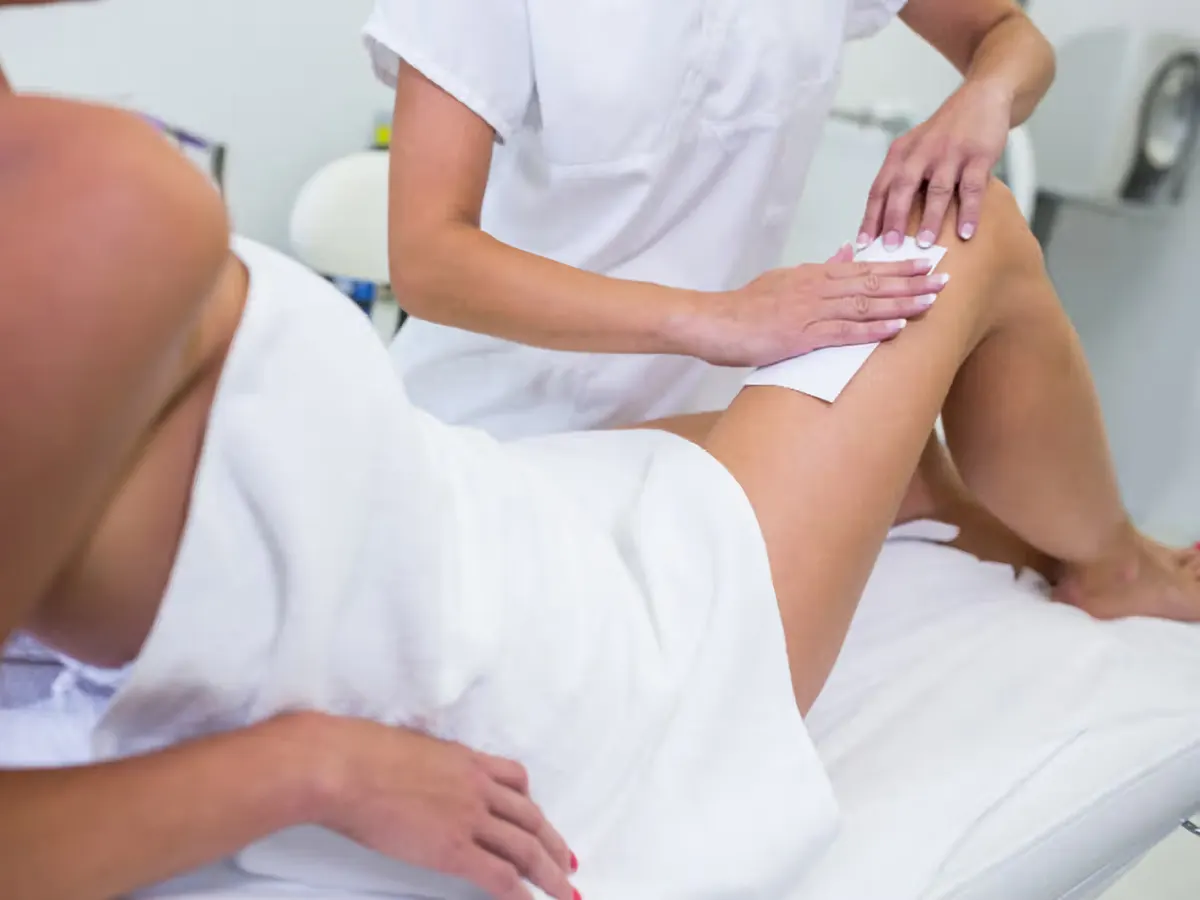
The beautician applies the wax in the direction of hair growth and removes it in one quick movement, close to the skin. She then places her hand on the area: this pressure calms the sensation straight away.
These are professional techniques. It is one of the reasons why a wax at a salon is often easier to bear than one done alone in your bathroom.
After the wax: leave your skin alone
After a wax, leave your skin in peace for a day or two. Redness is common straight after the treatment; in general, it fades within a few hours.
In the hours that follow:
- avoid the sun, the sauna, the steam room and very hot baths;
- avoid intense exercise and tight clothing, which make you sweat and rub;
- do not apply any scented product or deodorant to an area that has just been waxed, if you can;
- moisturise with a gentle, fragrance-free product.
In the following days:
- go back to a gentle scrub after a few days, once or twice a week: it generally helps to limit ingrown hairs;
- moisturise every day.
If a reaction lasts, if spots appear or if the skin stays painful, ask a pharmacist or a doctor.
The real secret: regularity (and no razor)
Wax at regular intervals, with no shaving between two sessions: that is what makes waxing easier and easier. The razor resets everything.
Why?
When you shave, you cut the hair cleanly, at the surface. It grows back with a blunt tip, and all the hairs start again at the same time. The result: the next wax is as sensitive as the first.
By letting the hair grow back until the next appointment, you keep hairs that are finer and easier to remove.
Book again when the regrowth reaches a few millimetres. The interval varies with the area and with each person.
First wax: where should you start?
For a first wax, start with an area that is not very sensitive and not very large. You will know how your skin reacts before you book the areas that worry you.
Our advice: half legs. At SIMEHA Institut, they cost CHF 40 for 1 h.
Another option: the underarms, at CHF 25. The area is more sensitive, but it is small and very quickly done.
| Treatment at SIMEHA Institut | Duration | Price |
|---|---|---|
| Underarms | 30 min | CHF 25 |
| Brazilian bikini | 30 min | CHF 45 |
| Classic bikini | 30 min | CHF 30 |
| High-cut bikini | 30 min | CHF 39 |
| Hollywood bikini | 1 h | CHF 55 |
| Full arms | 30 min | CHF 45 |
| Half arms | 30 min | CHF 35 |
| Half legs | 1 h | CHF 40 |
| Full legs | 1 h 30 min | CHF 65 |
| Upper lip | 30 min | CHF 20 |
| Eyebrows + upper lip | 30 min | CHF 30 |
| Face (cheeks and chin) | 30 min | CHF 35 |
And above all, tell the beautician that it is your first time. She will explain each step and adapt her pace.
When is it better to postpone?
Postpone your wax if the skin of the area is irritated, sunburnt or injured, or if you are on a treatment that makes it fragile. Waxing damaged skin hurts more and can damage it further.
Always mention:
- recent sunburn;
- a wound, an inflamed spot, an irritation;
- a skin treatment, taken by mouth or as a cream;
- marked varicose veins on the area;
- a known allergy.
If in doubt, ask your doctor before you book.
The beautician may also decide not to wax an area. Do not take it badly: it is a precaution, not a refusal.
Where can you get waxed?
SIMEHA Institut waxes with hot or warm wax, depending on the area and the skin type, at Rue Caroline 41, 1227 Genève, Suisse, in the Acacias district. We do not offer laser hair removal or IPL.
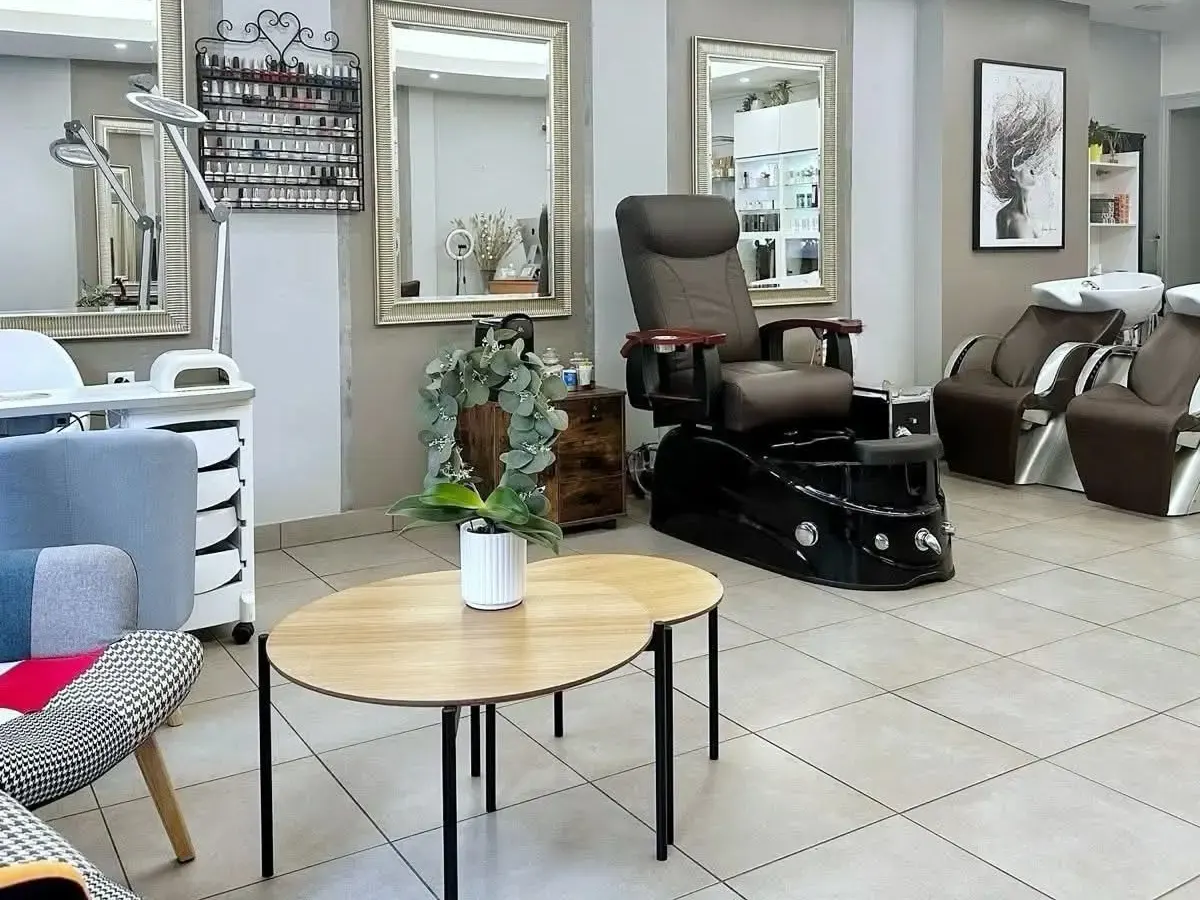
All the areas, their duration and their price are presented on the waxing page. You book online, with no account, and you pay at the salon.
Frequently asked questions
Can waxing ever be truly painless?
No, not completely: removing a hair with its root is always felt. The sensation can, however, be clearly reduced by well-prepared skin, hair of the right length, a wax suited to the area and a quick movement.
Which area is the most sensitive?
In general, the areas where the skin is thin and the hair is thick are the most sensitive: the bikini line, the underarms and the upper lip. Legs and arms are generally easier. Sensitivity varies a great deal from one person to another.
Hot wax or warm wax: which one hurts less?
It depends on the area. In general, hot wax is used on sensitive areas, such as the bikini line, the underarms and the face, and warm wax on large areas, such as the legs, the arms and the back. At the salon, the beautician chooses according to the area and your skin type.
How long does the hair need to be for waxing?
In general, a few millimetres: enough for the wax to grip the hair, not so much that it pulls. If your hair is very long, the beautician can trim it before the treatment.
Can you take a painkiller before a wax?
We do not give advice on medicines. If you are thinking of taking one, or of applying a numbing cream, ask your pharmacist or your doctor.
How much does waxing cost?
At SIMEHA Institut, waxing costs CHF 25 for the underarms, CHF 40 for half legs and CHF 30 for the classic bikini. All prices are shown before you book.
Conclusion
Let us be clear one last time: waxing will never be completely painless. But you have far more control over the sensation than you think.
A gentle scrub a few days before, hair of a few millimetres, clean dry skin, a time when you are rested: on their own, these habits make a real difference. The rest is the beautician's job, as she chooses the wax to suit the area and your skin.
And the most encouraging part: with regular appointments, each session is generally easier than the one before. The first is the hardest; after that, you will hardly think about it.
And you, which area makes you hesitate? Write to us, and we will tell you frankly what to expect.